🫤 Meaning in Text: What It Means and How to Reply
Someone sends you 🫤 in the middle of a conversation, and suddenly you’re wondering what went wrong. Are they confused, disappointed, annoyed, or simply unsure?
The 🫤 meaning in text usually points to uncertainty, skepticism, mild disappointment, awkwardness, or mixed feelings. It is the expression someone might make when something does not sound quite right, but they do not feel strongly enough to become angry or upset.
Because emojis can carry different tones, the message surrounding 🫤 matters. A friend may use it to say, “I’m not convinced,” while someone else may send it when they feel uncomfortable or do not know how to respond.
What Does 🫤 Mean in Text?
The 🫤 emoji usually means the sender feels unsure, doubtful, confused, disappointed, or slightly uncomfortable. It can also communicate a quiet “meh” reaction when something is neither terrible nor especially good.
Common interpretations include:
- “I’m not sure about that.”
- “I don’t believe you.”
- “That’s a little disappointing.”
- “This feels awkward.”
- “I have mixed feelings.”
- “It was okay, I guess.”
- “I don’t know how to respond.”
If you’re searching for what does 🫤 mean in texting, the simplest answer is that it shows a reaction somewhere between neutral and negative. The sender is feeling something, but the emotion may not be strong or clear enough for a smile, frown, or angry face.
For example:
“They changed our plans again 🫤”
Here, the sender is probably expressing mild frustration or disappointment.
“You really believe him? 🫤”
In this situation, 🫤 works as a skeptical emoji and suggests doubt or disbelief.
What Is the 🫤 Emoji Called?
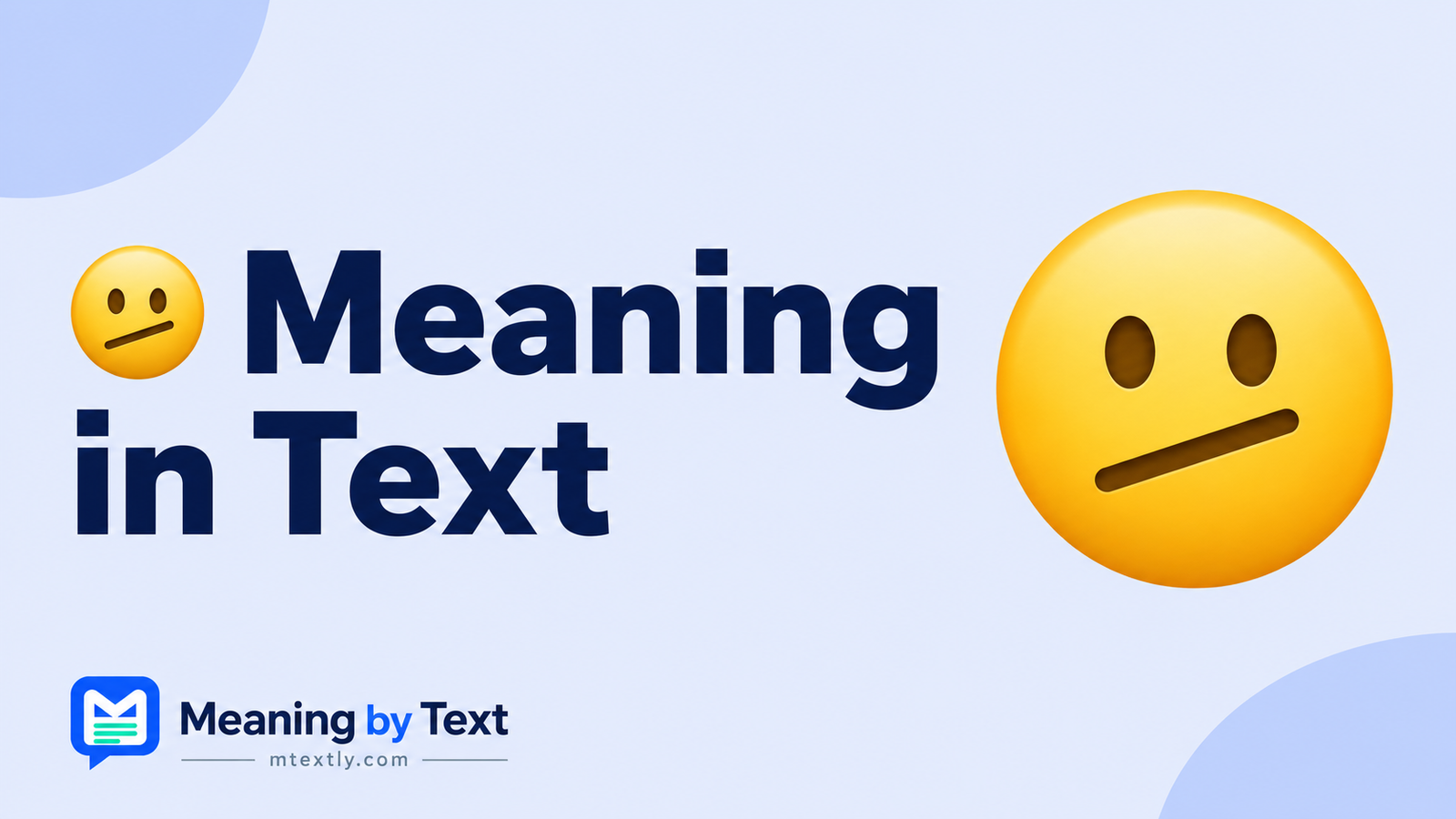
The official name of 🫤 is the Face with Diagonal Mouth emoji. It has open eyes and a closed mouth tilted diagonally, creating an uncertain or uneasy expression.
The emoji was introduced in Unicode 14.0 and Emoji 14.0 in 2021. Its Unicode code point is U+1FAE4.
Before this emoji was available, people often used text-based expressions such as :/ or :-/ to communicate the same feeling. The modern diagonal mouth emoji is essentially a more expressive version of those older emoticons.
Its appearance can vary slightly across Apple, Android, Samsung, Microsoft, and social media platforms. However, the general emoji meaning remains the same: uncertainty, doubt, disappointment, or mixed emotions.
The Most Common Meanings of 🫤
Feeling Unsure or Confused
One of the most common uses of 🫤 is to show that someone is uncertain about a decision, suggestion, or situation.
“I don’t know if I should go 🫤”
The sender has not completely rejected the idea. They are simply hesitant and may need more time to decide.
It can also appear when someone receives information that does not make sense:
“Wait, I thought the meeting was tomorrow 🫤”
Here, it acts like a confused emoji, showing that the sender is trying to understand what happened.
Doubt and Skepticism
The 🫤 emoji can signal that the sender does not completely believe what they have heard.
“He said he forgot his phone again 🫤”
This message suggests, “That excuse sounds questionable.” The sender may be suspicious without wanting to accuse anyone directly.
When used this way, 🫤 represents skepticism, disbelief, doubt, or an “if you say so” attitude. It softens the response while still showing that the person is unconvinced.
Disappointment or Mild Frustration
Someone may use 🫤 when an experience fails to meet their expectations.
“The new episode wasn’t that good 🫤”
The sender is disappointed, but probably not seriously upset. This makes 🫤 a useful disappointed emoji for expressing a low-level negative reaction.
It can also communicate mild annoyance:
“My order is delayed again 🫤”
The person is frustrated, but the emoji keeps the message calmer than an angry face would.
Awkwardness or Discomfort
Sometimes 🫤 means that a conversation or situation feels uncomfortable.
“He brought up his ex during our date 🫤”
In this example, the sender may feel embarrassed, uneasy, or unsure what to say. The emoji captures the facial expression people often make during an awkward moment.
It can also be sent after an inappropriate joke or strange comment:
“That was a weird thing to say 🫤”
The awkward emoji tone tells the other person that their comment did not land well.
Mixed Feelings or Indecision
The Face with Diagonal Mouth emoji is especially useful when someone sees both good and bad sides of a situation.
“The job pays more, but the commute is two hours 🫤”
The sender is not completely happy or unhappy. They have mixed feelings and are struggling to decide whether the positive part outweighs the negative.
In this context, 🫤 can represent indecision, hesitation, ambivalence, or feeling emotionally conflicted.
A “Meh” or Unimpressed Reaction
When something is average or underwhelming, 🫤 can mean “It was fine, but nothing special.”
“How was the restaurant?”
“It was okay 🫤”
The sender is not necessarily complaining. They simply were not impressed.
This use is similar to saying meh, whatever, not great, or “I expected better.” It is softer than openly criticizing something but still communicates low enthusiasm.
Sarcasm or Dry Humor
The emoji can add a layer of sarcasm when paired with a statement that is meant to sound positive.
“Another two-hour meeting. Exactly what I needed 🫤”
The words appear positive, but the emoji shows that the sender means the opposite.
Because sarcasm is easy to misunderstand in a text message, the surrounding words are important. On its own, 🫤 may look uncertain rather than sarcastic.
What Does 🫤 Mean From a Guy?
The 🫤 meaning from a guy depends on what you were discussing before he sent it. It could mean that he is uncertain, unconvinced, disappointed, or uncomfortable.
If you invite him somewhere and he replies:
“Maybe 🫤”
He may be hesitant about the plan or unsure whether he can attend. It does not automatically mean that he dislikes you.
If you explain something and he responds only with 🫤, he might doubt your explanation or feel that part of the story does not make sense.
In a dating conversation, the emoji can also signal awkwardness:
“So, are we officially dating?”
“I don’t know 🫤”
That response suggests uncertainty about the relationship. It is better to ask what he means instead of treating the emoji as an automatic rejection.
What Does 🫤 Mean From a Girl?
The 🫤 meaning from a girl can include disappointment, doubt, hesitation, discomfort, or mixed emotions. Her exact intention depends on the conversation, not her gender.
If plans are cancelled and she replies:
“Okay 🫤”
She may be disappointed even though she is trying not to make a big issue of it.
If she responds to a compliment with:
“You really think so? 🫤”
She might be unsure whether the compliment is genuine. Depending on your relationship, the message could also be playful skepticism.
Look at her previous messages, usual texting style, and the topic being discussed. Some people use 🫤 casually, while others send it only when something genuinely bothers them.
Is 🫤 Flirty?
The 🫤 emoji is not naturally a flirty emoji. On its own, it usually communicates doubt, hesitation, discomfort, or disappointment.
However, it can sound playful when used during teasing:
“You think you can beat me? 🫤”
In this example, the sender may be jokingly skeptical rather than genuinely annoyed.
It could also appear after a compliment:
“You say that to everyone 🫤”
The sender might be playfully challenging you to prove that you mean it. Look for other signs of flirting, such as affectionate language, teasing, compliments, or continued interest in the conversation.
Is the 🫤 Emoji Rude or Passive-Aggressive?
The 🫤 emoji is not automatically rude, but it can feel passive-aggressive or dismissive in certain conversations.
For example, sending only 🫤 after someone writes a long explanation may make it seem as though you do not believe them or do not care enough to respond properly.
Compare these two messages:
“I understand. I’m just a little unsure about the plan 🫤”
This sounds honest and calm.
“Sure 🫤”
This may sound doubtful, irritated, or sarcastic.
The emoji generally carries a slightly negative or hesitant texting tone, so it may not be suitable for serious conversations where clarity matters. Adding a few words can prevent the other person from misreading your intention.
Examples of 🫤 in Text Conversations
| Text example | Likely meaning |
|---|---|
| “I guess we could go there 🫤” | Reluctance or uncertainty |
| “That’s what they told you? 🫤” | Doubt or skepticism |
| “The food was okay 🫤” | Unimpressed or disappointed |
| “I can’t make it tonight 🫤” | Regret or mild sadness |
| “Well, that got awkward 🫤” | Discomfort or embarrassment |
| “Sure, if you say so 🫤” | Disbelief or sarcasm |
| “I like the job, but the hours are terrible 🫤” | Mixed feelings |
| “They changed the schedule again 🫤” | Mild frustration |
| “I don’t know what to choose 🫤” | Confusion or indecision |
| “The movie wasn’t bad, I guess 🫤” | A ‘meh’ reaction |
How to Reply to 🫤 in a Text
The best response depends on why the person sent it. If their meaning is unclear, asking a relaxed question is usually better than making assumptions.
When They Seem Confused
If the person appears confused, offer to explain what you meant.
You could reply:
- “What part is confusing?”
- “Did I explain that badly?”
- “Want me to clarify?”
- “What are you unsure about?”
These replies keep the conversation open without making the sender feel embarrassed.
When They Seem Disappointed
If your decision or message may have disappointed them, acknowledge their feelings.
Try:
- “I know—it’s not what we planned.”
- “I’m disappointed too.”
- “Sorry, I should have told you sooner.”
- “Can we find another time that works?”
A thoughtful response is especially helpful when the emoji follows cancelled plans, bad news, or a missed opportunity.
When They Do Not Believe You
When 🫤 appears skeptical, avoid becoming defensive immediately. Ask what feels unclear or provide more context.
Possible replies include:
- “I know it sounds strange, but that’s what happened.”
- “You don’t believe me?”
- “What part sounds off?”
- “I can explain if you want.”
This gives the person a chance to express their concern directly.
When the Conversation Feels Awkward
If both of you recognize that the situation is uncomfortable, a light response may help.
You could say:
- “Yeah, that got awkward quickly.”
- “I didn’t know how to respond either.”
- “Let’s pretend that didn’t happen.”
- “Don’t worry about it—we’re good.”
Humor can work when the situation is minor, but serious discomfort should be addressed honestly.
When They Seem Unsure About a Plan
The sender may need more information or another option before deciding.
Try replying:
- “We don’t have to decide right now.”
- “Would another day work better?”
- “What would make you feel more comfortable?”
- “It’s okay if you’re not interested.”
These responses remove pressure and make it easier for the person to answer honestly.
When You Cannot Tell What They Mean
Sometimes the easiest response is simply to ask.
You can say:
- “What does the 🫤 mean?”
- “Are you unsure about something?”
- “Did that bother you?”
- “I can’t tell if you’re confused or disappointed.”
Knowing how to reply to 🫤 is mostly about reading the conversation and giving the sender room to explain their feelings.
🫤 Compared With Similar Emojis
Several emojis can communicate confusion or dissatisfaction, but their tones are slightly different.
| Emoji | Common meaning | Main difference |
|---|---|---|
| 🫤 | Uncertainty, skepticism, mixed feelings, mild disappointment | Suggests something feels off or is neither fully good nor bad |
| 😕 | Confusion, hesitation, concern | Looks more clearly puzzled or worried |
| 😐 | Neutrality, indifference, no reaction | Shows less emotion and may seem emotionally flat |
| 🤨 | Suspicion, disbelief, questioning | More direct and confrontational than 🫤 |
| 🙄 | Annoyance, dismissal, impatience | Stronger and more obviously irritated |
| 😒 | Displeasure, irritation, being unimpressed | Shows clearer dissatisfaction |
The difference between 🫤 vs. 😕 can be especially confusing. 😕 usually says, “I don’t understand,” while 🫤 often says, “I understand, but I’m not sure how I feel about it.”
What Does 🫤 Mean on Social Media?
The basic meaning of 🫤 remains similar across messaging apps and social platforms. What changes is the type of conversation in which it appears.
🫤 Meaning on Snapchat and WhatsApp
On Snapchat and WhatsApp, 🫤 is commonly used in private conversations to express:
- Uncertainty about plans
- Disappointment after bad news
- Doubt about someone’s explanation
- An awkward or uncomfortable reaction
- Low enthusiasm about a suggestion
If someone sends it by itself, check the previous message. The emoji is usually reacting directly to what was just said.
🫤 Meaning on TikTok and Instagram
On TikTok and Instagram, the emoji may appear in comments or captions when someone finds content strange, questionable, awkward, or underwhelming.
For example:
“Everyone said this was the best restaurant 🫤”
The writer probably feels disappointed or unconvinced by the hype.
In a comment, 🫤 may also mean, “I don’t know how to feel about this” or “Something about this seems wrong.”
When Should You Use the 🫤 Emoji?
Use 🫤 when you want to express a mild negative or uncertain feeling without sounding overly dramatic.
It works well when:
- You have mixed emotions about a decision.
- You are unsure whether you agree with someone.
- Something feels awkward or uncomfortable.
- You are mildly disappointed.
- You are not fully convinced by an explanation.
- An experience was average or underwhelming.
- You want to express hesitation without directly saying no.
Avoid relying on it during important conversations about relationships, work, health, or personal problems. Since the emoji can mean several things, the other person may misunderstand whether you feel confused, annoyed, or disappointed.
Other Emoji Meanings People Ask About
What Does 💦 💦 Mean in Texting?
The 💦 emoji is officially known as Sweat Droplets. In everyday texting, it can represent sweat, water, splashing, physical effort, heat, nervousness, or stress.
For example:
“That workout was intense 💦💦”
Here, it refers to sweating after exercise.
Repeated sweat droplets can make the emotion or action feel stronger. They may also communicate excitement, stylish confidence or “drip,” and various forms of liquid. In flirtatious or adult conversations, 💦 can have a sexual meaning. The surrounding words and relationship between the senders determine which interpretation makes sense.
What Does 🤏 🤏 🤏 🤏 Mean?
The 🤏 emoji is called the Pinching Hand emoji. It usually means something is very small or that only a tiny amount is needed.
Repeating it several times adds emphasis:
“I was 🤏🤏🤏🤏 close to winning.”
This means the person came extremely close but did not quite succeed.
It can also mean “just a little,” “almost,” or “a tiny bit.” When directed at a person, it may be used as a joke or insult about size, so its tone can become rude depending on the conversation.
What Does 😕 Mean in Texting?
The 😕 emoji is the Confused Face emoji. It commonly expresses confusion, uncertainty, hesitation, concern, slight sadness, or disappointment.
For example:
“I thought you said you were coming 😕”
The sender may be confused by the change of plans and slightly disappointed.
Although 😕 and 🫤 overlap, 😕 usually looks more openly puzzled. The 🫤 emoji leans more toward doubt, mixed feelings, skepticism, or an uneasy “meh” response.
What Does 👅 Mean in Texting?
The 👅 emoji represents a tongue sticking out. It can mean licking, tasting food, playful teasing, childish defiance, or joking around.
In a food-related message, it may suggest that something looks delicious:
“That dessert looks amazing 👅”
Between friends, it can create a silly or mischievous tone. In romantic or adult conversations, 👅 may become flirty or sexually suggestive. Its meaning depends heavily on the message around it and the relationship between the people texting.