Dry Text Meaning: What It Means and How to Respond
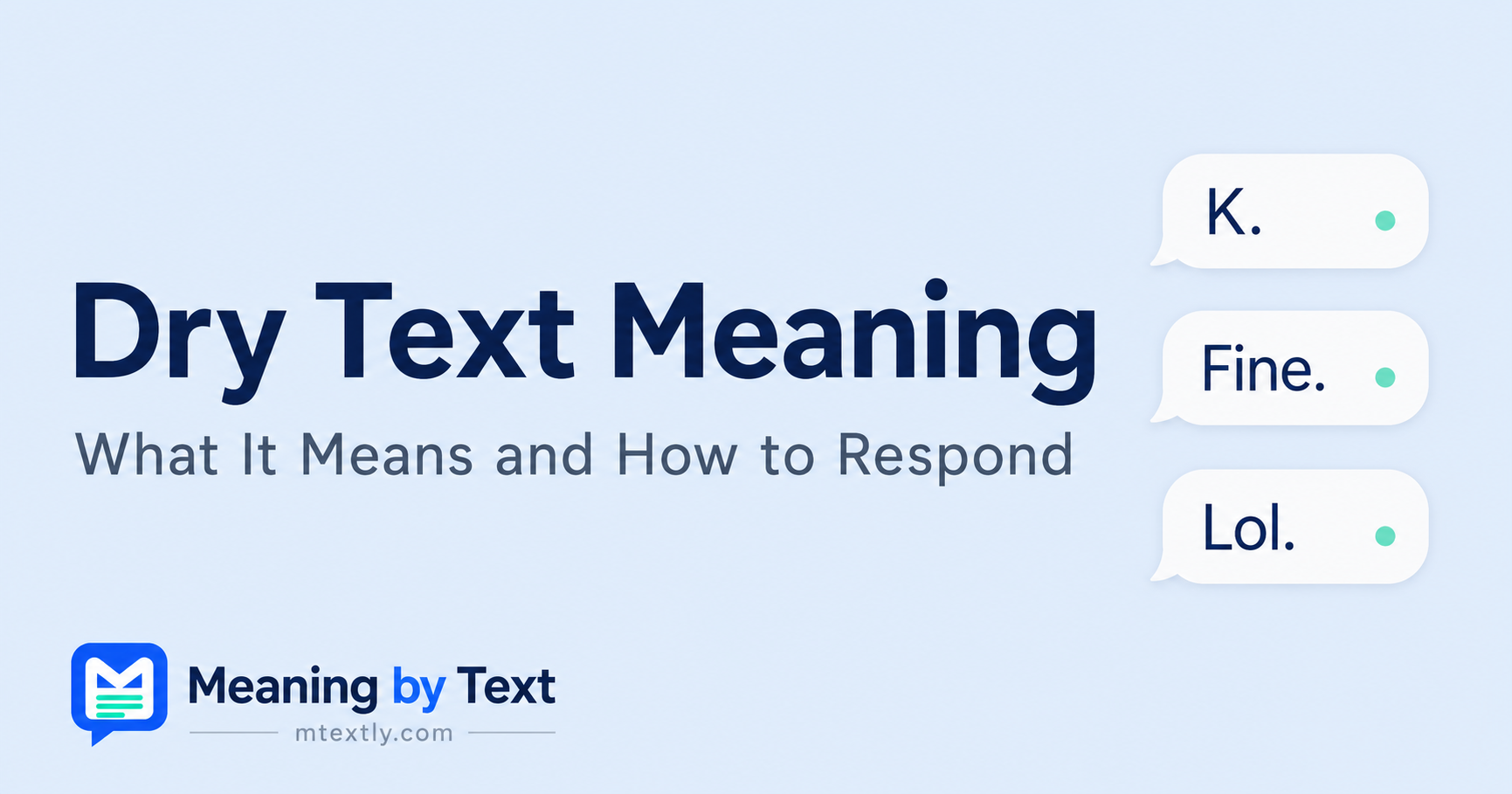
You send someone a thoughtful message, only to receive “k,” “fine,” or “lol” in return. Now you’re wondering whether they’re busy, upset, bored, or simply no longer interested in talking.
The dry text meaning is fairly simple: a dry text is a short, emotionally flat, or low-effort message that gives the other person little to respond to. One brief reply does not necessarily make someone a dry texter, though. It is usually the repeated lack of warmth, curiosity, and conversational effort that makes texting feel dry.
What Does Dry Text Mean?
In texting, “dry” describes a message that lacks detail, enthusiasm, emotion, or anything that could keep the conversation moving.
Common dry text examples include:
- “K”
- “Yeah”
- “Fine”
- “Cool”
- “Nice”
- “Idk”
- “Lol”
- “Whatever”
A person may also be dry texting when they answer questions but never ask anything in return, ignore most of a detailed message, or repeatedly make the other person introduce every new topic.
However, message length is not the only thing that matters. A short message can still feel caring and engaged.
For example:
“Busy right now, but I’ll call you tonight.”
This reply is brief, but it acknowledges the message, explains the situation, and shows an intention to reconnect. Compare that with:
“K.”
The second reply offers no context and can sound cold or dismissive.
That is why what does dry mean in texting is better understood through tone and effort than word count alone.
What Does Dry Texting Look Like?
A dry text conversation often feels one-sided. One person keeps asking questions, sharing stories, and introducing topics while the other provides the smallest possible response.
Common Signs of a Dry Text Conversation
Someone may be texting dry if they regularly:
- Send one-word replies
- Answer with “k,” “yeah,” “fine,” or “idk”
- Never ask follow-up questions
- Reply to a paragraph with one or two words
- Give yes-or-no answers to open-ended questions
- Ignore important parts of a message
- Rarely introduce a fresh topic
- Never start conversations
- Respond without showing curiosity or emotion
- Make you carry the entire conversation
- Suddenly sound colder than they normally do
Missing emojis, punctuation, or capital letters does not automatically indicate disinterest. Some people naturally text without expressive punctuation or emojis. The stronger sign is a continuing pattern of short text replies with little effort behind them.
Brief but Engaged Texting vs. Dry Texting
| Brief but engaged texting | Dry texting |
|---|---|
| “Busy now, but I’ll message you later.” | “K.” |
| Gives a short but useful answer | Gives the smallest possible answer |
| Asks something in return | Never asks questions |
| Responds to what was shared | Ignores most of the message |
| Explains why they cannot talk | Leaves the other person guessing |
| Still sounds warm or considerate | Feels flat, distant, or dismissive |
The difference is not always obvious from one message. Look at the overall conversation and the person’s usual texting style.
Why Do People Send Dry Texts?
People send dry replies for many reasons, and not all of them involve rejection. Before assuming someone is losing interest, consider what else may be happening.
They Are Busy or Distracted
Someone who is working, studying, driving, or dealing with several responsibilities may only have time for a quick reply. They might answer briefly because they do not want to ignore you completely.
They Are Tired or Emotionally Drained
Texting requires social energy. A person who is exhausted, stressed, or overwhelmed may struggle to hold a detailed conversation even when they still care about you.
They Naturally Have a Brief Texting Style
Some people have always been bad texters. They use messages mainly to exchange information or arrange plans rather than to have long conversations. They may be warm and talkative in person while sounding distant over text.
They Prefer Calls or Face-to-Face Conversations
Not everyone enjoys typing out thoughts and feelings. Someone may prefer phone calls, voice notes, video chats, or meeting in person.
They Do Not Know What to Say
Shyness, nervousness, or texting anxiety can make people give short answers. This is especially common during early dating, when someone may be overthinking every reply.
The Conversation Has Run Its Course
Sometimes the topic simply does not leave much room for another response. A short answer at the natural end of a conversation is different from consistently sending dry replies.
They Are Upset
A sudden change in tone may mean the person is annoyed, hurt, or dealing with an unresolved issue. Instead of explaining what is wrong, they might withdraw and send colder messages.
They Are Losing Interest
Dry texting can indicate low interest when it appears alongside other changes. If someone never initiates, avoids making plans, and shows little curiosity about your life, their short replies may reflect a wider drop in effort.
A few messages are not enough to diagnose someone’s feelings, personality, or attachment style. Their usual behavior and effort outside texting provide better clues.
What Dry Texting Can Mean in Different Relationships
The meaning of a dry reply can change depending on your relationship with the sender.
Dry Texting During Early Dating
Dry texting in dating can be confusing because you may not know the other person’s communication habits yet. A flat reply can feel like a clear sign of rejection, but it could also come from nervousness, busyness, or a dislike of texting.
Low interest becomes more likely when the person:
- Never messages first
- Avoids answering personal questions
- Does not suggest meeting
- Frequently cancels plans
- Shows little interest both online and in person
- Only replies when they want attention or a favor
Instead of judging attraction through message length alone, look at whether they make time for you and follow through on plans.
Dry Texting in a Relationship
A boyfriend, girlfriend, or partner may send shorter texts because the relationship has become comfortable. They might use texting for practical updates and save deeper conversations for later.
Stress, work, routine, and tiredness can also make a partner less expressive. However, a sudden change after an argument could suggest unresolved feelings.
Persistent dry replies may deserve a calm conversation when they appear with:
- Emotional distance
- Less affection
- Avoided conversations
- Declining effort
- Repeatedly cancelled plans
- No interest in spending time together
Dry Texting Between Friends and Family
Friends and family members do not always feel the need to keep every conversation going. A close friend may send “okay” because they know the relationship is secure, not because they are angry.
Age and communication habits also matter. Parents, teenagers, and adult friends may interpret texting tone differently. If someone who is usually expressive suddenly becomes withdrawn, a gentle check-in may be more helpful than assuming the change is personal.
Bad Texter or Not Interested?
The question behind many searches for dry text meaning is whether someone communicates poorly or genuinely does not want to talk.
| They may simply be a bad texter | They may be losing interest |
|---|---|
| They have always sent brief messages | Their communication suddenly changed |
| They sometimes start conversations | You always have to text first |
| They make and keep plans | They avoid making plans |
| They are attentive in person | They seem distant everywhere |
| They prefer calls or meeting up | They avoid other forms of contact |
| Their replies are short but reliable | Their replies become rarer and colder |
| They show care through actions | Their overall effort continues to decline |
Pay attention to the person’s normal communication baseline. If they have always sent short messages but regularly call, make plans, and treat you warmly in person, they are probably just a brief texter.
If they used to communicate enthusiastically and have suddenly become distant across every channel, the change may be more meaningful.
How to Respond to a Dry Text
Receiving a flat reply can be frustrating, but reacting emotionally to one message may create unnecessary tension. Try to understand the pattern before deciding how to respond.
Give One Short Reply Some Space
A single “fine” may mean the person is busy, tired, or unable to talk. You do not need to send several messages immediately to revive the conversation.
You could say:
“Sounds like you’re busy. We can talk later.”
This gives them room without sounding angry or demanding.
Ask a More Specific Question
Generic questions such as “How was your day?” often produce generic answers. Ask about something the person has already mentioned.
Instead of:
“Was work okay?”
Try:
“How did that meeting with your manager go?”
Specific open-ended questions give the other person something clear to discuss.
Introduce a Better Topic
The current conversation may simply be uninteresting. Bring up a shared interest, a funny story, an upcoming plan, or something you previously discussed.
You could send:
“I finally watched the movie you recommended. That ending was not what I expected. What did you think of it?”
A relevant meme, photograph, or short video can also make the exchange feel more natural.
Try Another Communication Method
If the person seems uncomfortable over text, suggest a call, voice note, or casual meetup.
For example:
“I feel like texting isn’t really our thing. Want to call later?”
Their response may help you distinguish a texting style mismatch from a lack of interest.
Check In Calmly
If the dry replies are unusual or have continued for several days, ask about the change without accusing them.
Try:
“You’ve seemed quieter than usual lately. Is everything okay?”
You can also be more direct:
“I sometimes find it hard to read our conversations. Do you prefer calls to texting?”
A calm question is more likely to produce an honest answer than a passive-aggressive comment.
Step Back if the Effort Remains One-Sided
You should not have to invent every topic and carry every exchange. If someone consistently shows no curiosity, never initiates, and avoids spending time with you, give the conversation some space.
Stepping back does not mean ignoring them as a test. It means paying attention to whether they make any effort when you stop doing all the work.
Natural Responses to Dry Texts
The best response depends on the relationship and the message.
When They May Be Busy
“No worries. Message me when you’re free.”
“I’ll let you get back to your day.”
When You Want to Restart the Conversation
“You mentioned an interview earlier. How did it go?”
“What was the most interesting part of your day?”
When They Seem Upset
“You seem a little quiet. Is something bothering you?”
“No pressure to talk right now, but I’m here if you need me.”
When You Want Clarity
“I feel like I’ve been carrying our conversations lately. Are you still interested in talking?”
“Your messages have felt different recently. Has something changed?”
These replies are direct without being aggressive or overly dramatic.
What Not to Do After Receiving a Dry Text
When a reply feels cold, avoid reacting in a way that could make the situation worse.
- Do not immediately send several follow-up messages.
- Avoid sarcastic comments such as “Wow, so talkative.”
- Do not send a long emotional paragraph after one short reply.
- Avoid accusing someone of cheating or losing interest without evidence.
- Do not repeatedly ask whether they are angry.
- Avoid deliberately ignoring them to see whether they chase you.
- Do not keep forcing a conversation that is consistently one-sided.
A person’s reply may be disappointing, but it does not always require an immediate confrontation.
How to Stop Being a Dry Texter
If people regularly struggle to continue conversations with you, a few small changes can make your messages feel more engaging.
Instead of replying:
“Good.”
Try:
“It was good. I finally finished that project I was worried about. How was your day?”
You can also:
- Add one relevant detail to your answer
- Ask a question in return
- Respond to a specific part of the other person’s message
- Share a related opinion or experience
- Introduce a new topic occasionally
- Tell people when you are too busy to talk properly
- Use voice notes or calls if typing feels unnatural
- Be honest when you are not in the mood to text
You do not have to write long paragraphs. A little detail and curiosity can prevent low-effort messages from creating confusing mixed signals.
Dry Texting vs. Similar Texting Behaviors
| Behavior | What it means |
|---|---|
| Dry texting | Sending minimal replies that do not move the conversation forward |
| Left on read | Opening a message without responding |
| Ghosting | Ending communication without an explanation |
| Breadcrumbing | Giving occasional attention without offering meaningful commitment |
| Slow texting | Taking longer to reply, even though the eventual response may be thoughtful |
| Double texting | Sending another message before receiving a reply to the first |
A slow reply is not necessarily a dry reply. Someone can take several hours to respond and still send a warm, thoughtful message. Similarly, a dry texter still replies, while someone who is ghosting stops communicating altogether.
Is Dry Texting a Red Flag?
Dry texting is not automatically a red flag. Some people are naturally brief, busy, or more expressive in person. It becomes more concerning when it is persistent and appears alongside avoided plans, no initiation, emotional distance, and consistently one-sided effort.
Is Dry Texting Disrespectful?
Dry texting can feel disrespectful when someone knowingly gives dismissive answers during an important conversation. However, a naturally brief texter may not intend to be rude. Consider the context, the person’s normal habits, and whether you have discussed your communication expectations.
What Is an Example of Dry Texting?
Here is a simple dry texting example:
Person A: “How did your interview go? Were the questions difficult?”
Person B: “Fine.”
The reply gives no detail and does not continue the conversation. One response like this may simply mean the person is occupied, but repeatedly answering this way creates a dry text conversation.
Why Does My BF Dry Text Me?
Your boyfriend may be busy, stressed, tired, comfortable in the relationship, or naturally bad at texting. He could also be upset about something or becoming less emotionally engaged.
Compare his current messages with his usual behavior. Notice whether he still initiates conversations, makes plans, shows affection, and puts effort into the relationship outside texting. If the change continues, ask him calmly rather than trying to guess what every short reply means.